

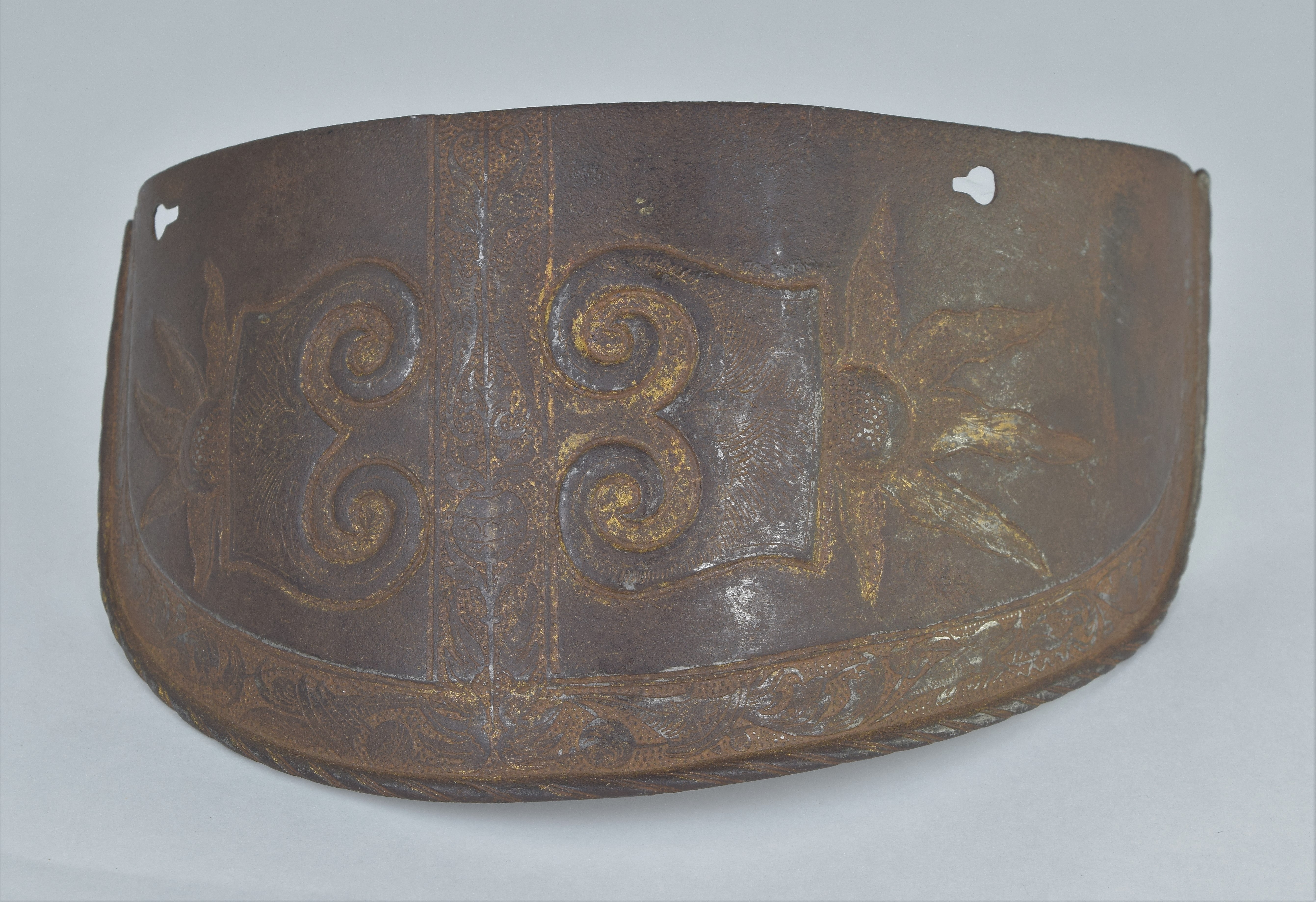
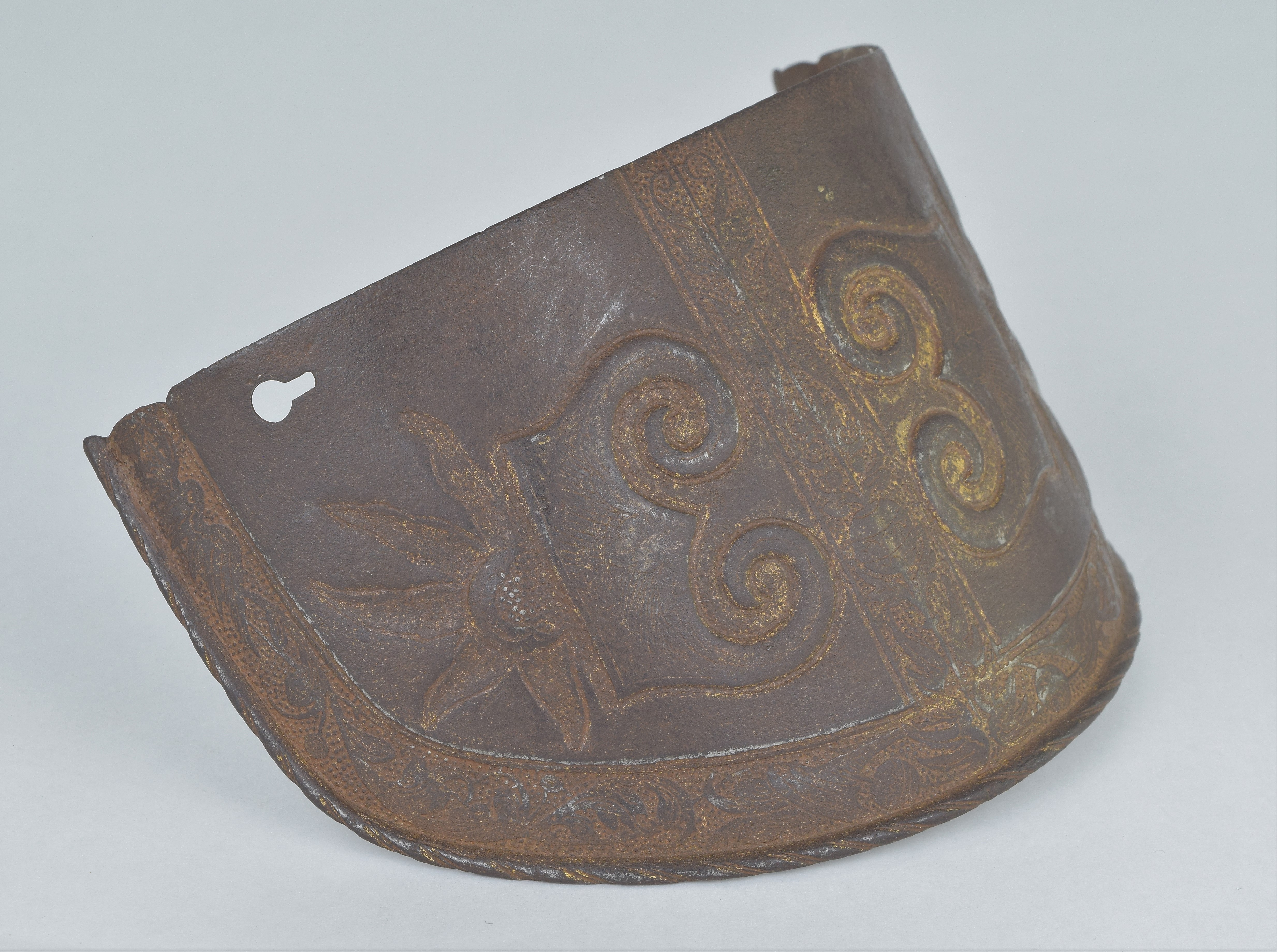
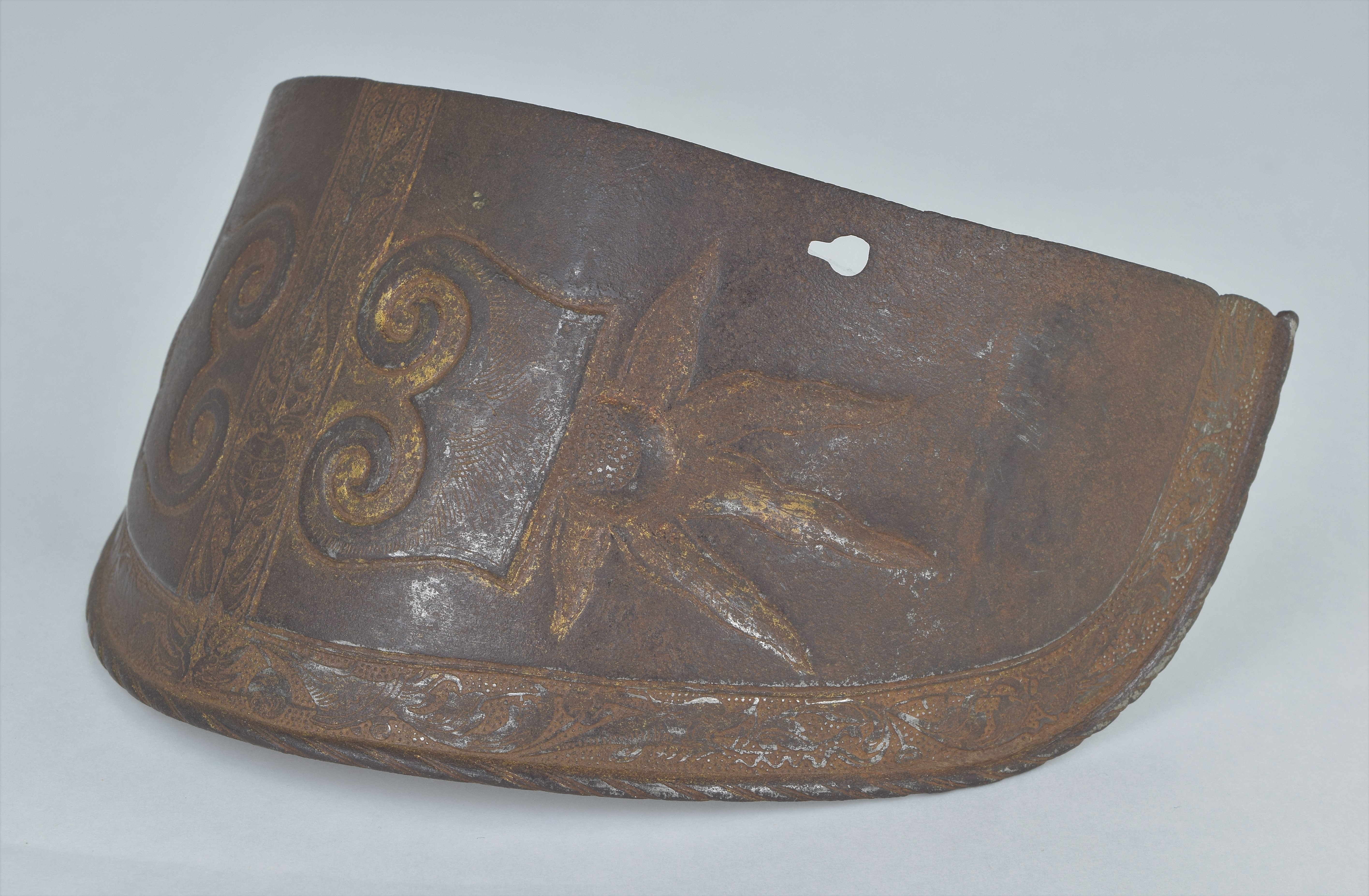
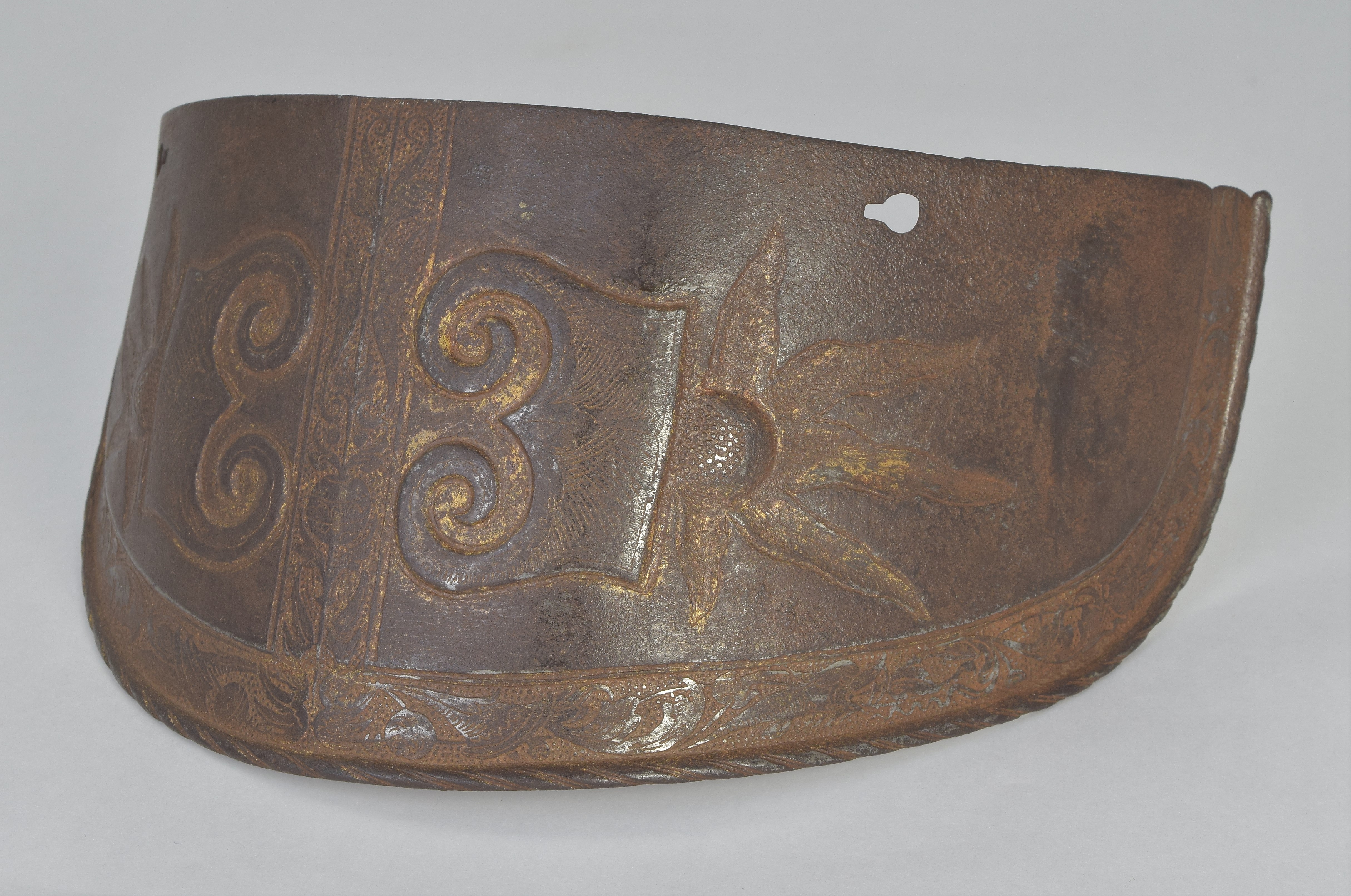

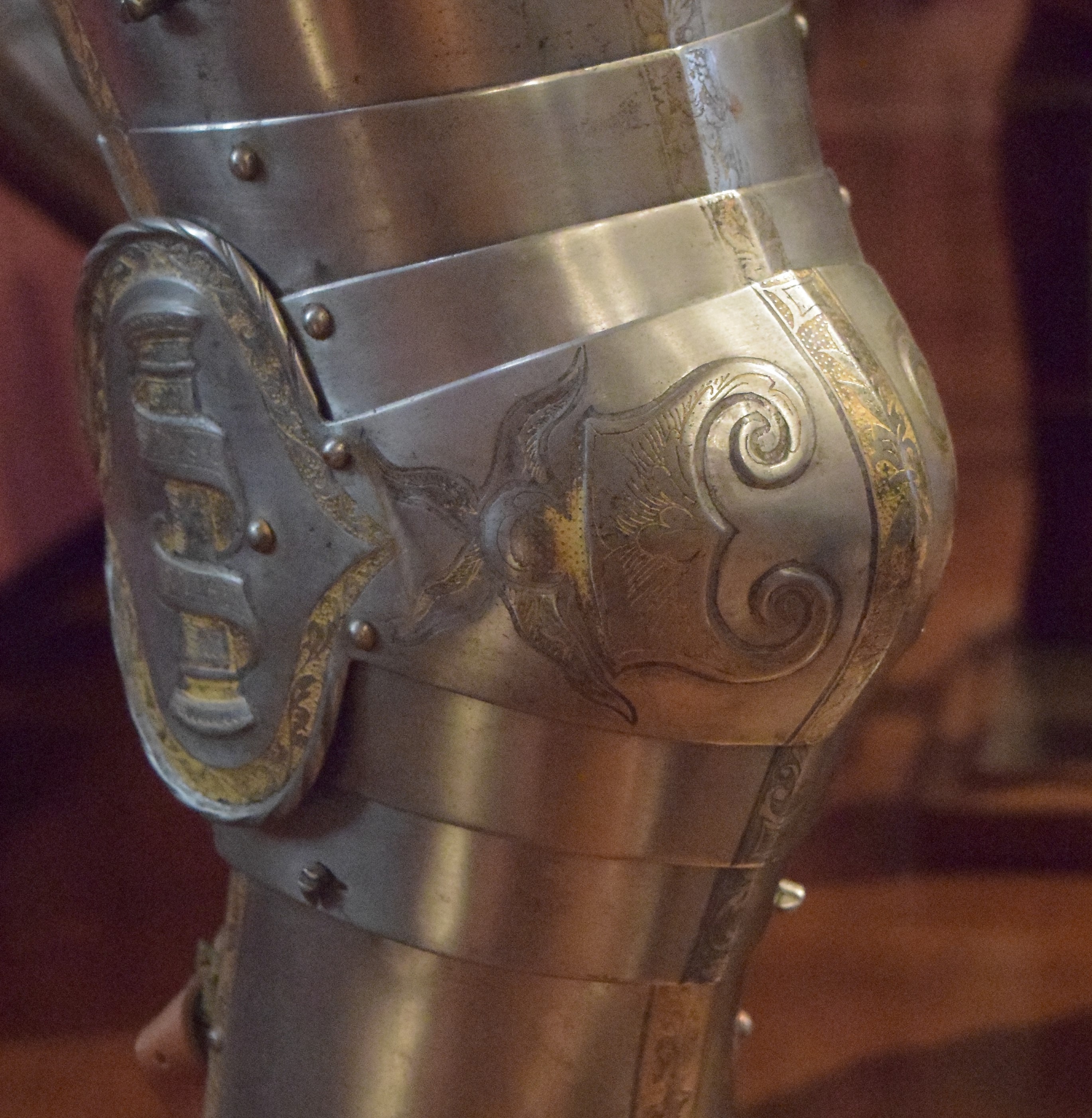
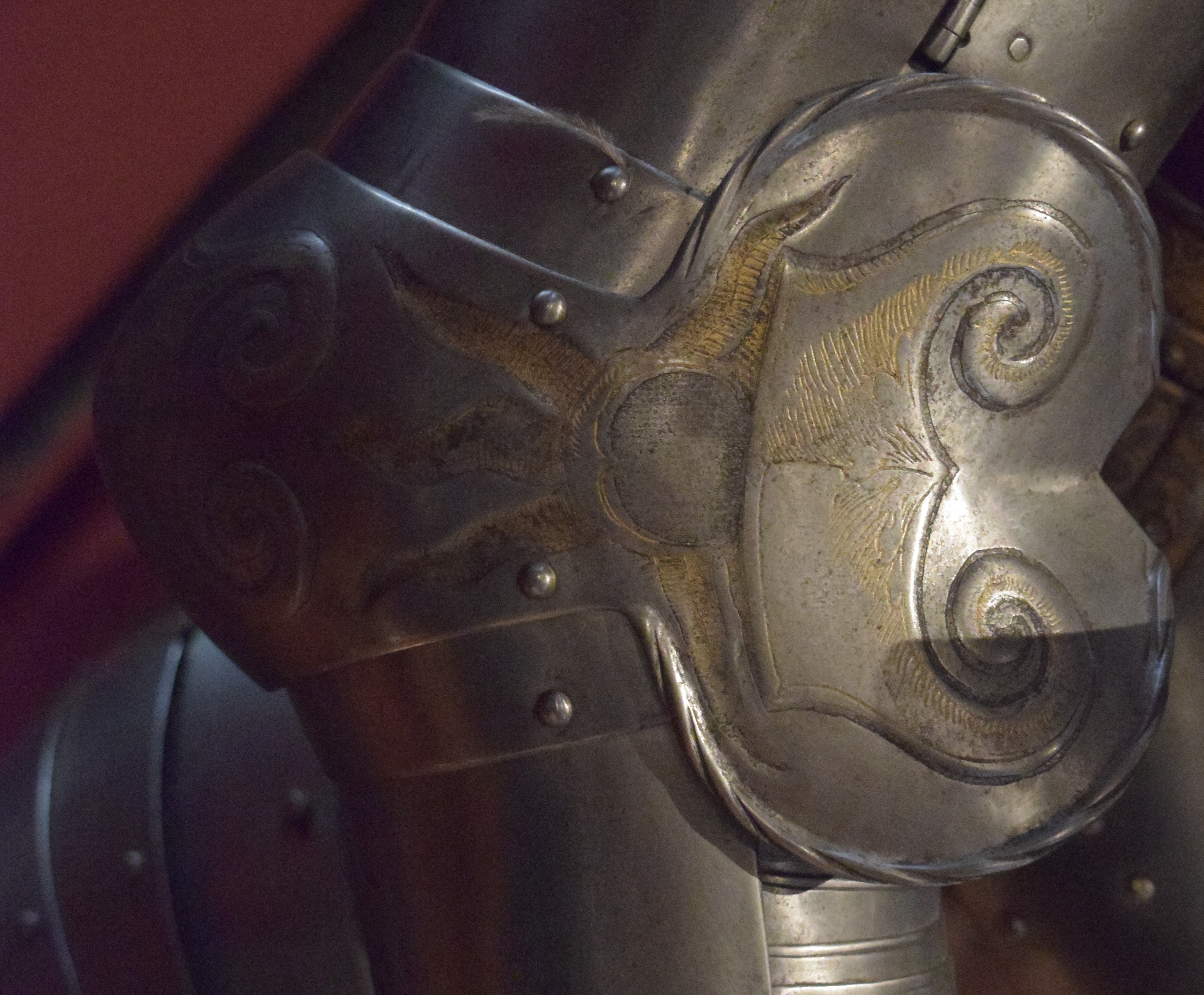
Tasset end plate 1530-40
Single plate. Inward turned roll around the bottom edge extending up the sides. 2 keyhole slots at the top for attachment to the upper tasset plates. Embossed and recessed decoration with etching. Recessed border around the edge with etching. Central band of etching. Purportedly from the Madrid Real Armeria after the Spanish Civil War (according to the seller), also attributed possibly to the Lisbon armoury. The decoration on each side is a firesteel and stone creating fire. This symbol is associated with the Order of the Golden Fleece.
The first comparable firesteel decoration I found in museum visits was during a trip to Vienna. A slightly different form of the same image appears on the elbow wings of an armour for Philipp II of Spain that was made in 1544 by Desiderius Helmschmid (A 547 in the KHM) illustrated above - the image showing the white, gilt and blued elbow.
A later trip to Madrid provided a much better match. Another set of firesteels are found on elements of armor for Charles V in the Real Armeria in Madrid attributed to Kolman Helmschmid, Augsburg 1531 (A.108) These are each illustrated in the next images above. These are very similar to the firesteels on the present piece, but the etching in the borders are not the same. I worked my way up the central band on a raw image and found a much better match including the pomegranate and similar leafy decoration. The larger image also shows that the knee is detachable in a way that would allow this plate to replace the knee section. This piece could still be part of the same garniture, many of the armours for Charles V are large enough and have enough spare parts that their etching does not match. For example, the Muhlberg garniture appears to have app. 20 different border etching patterns represented.
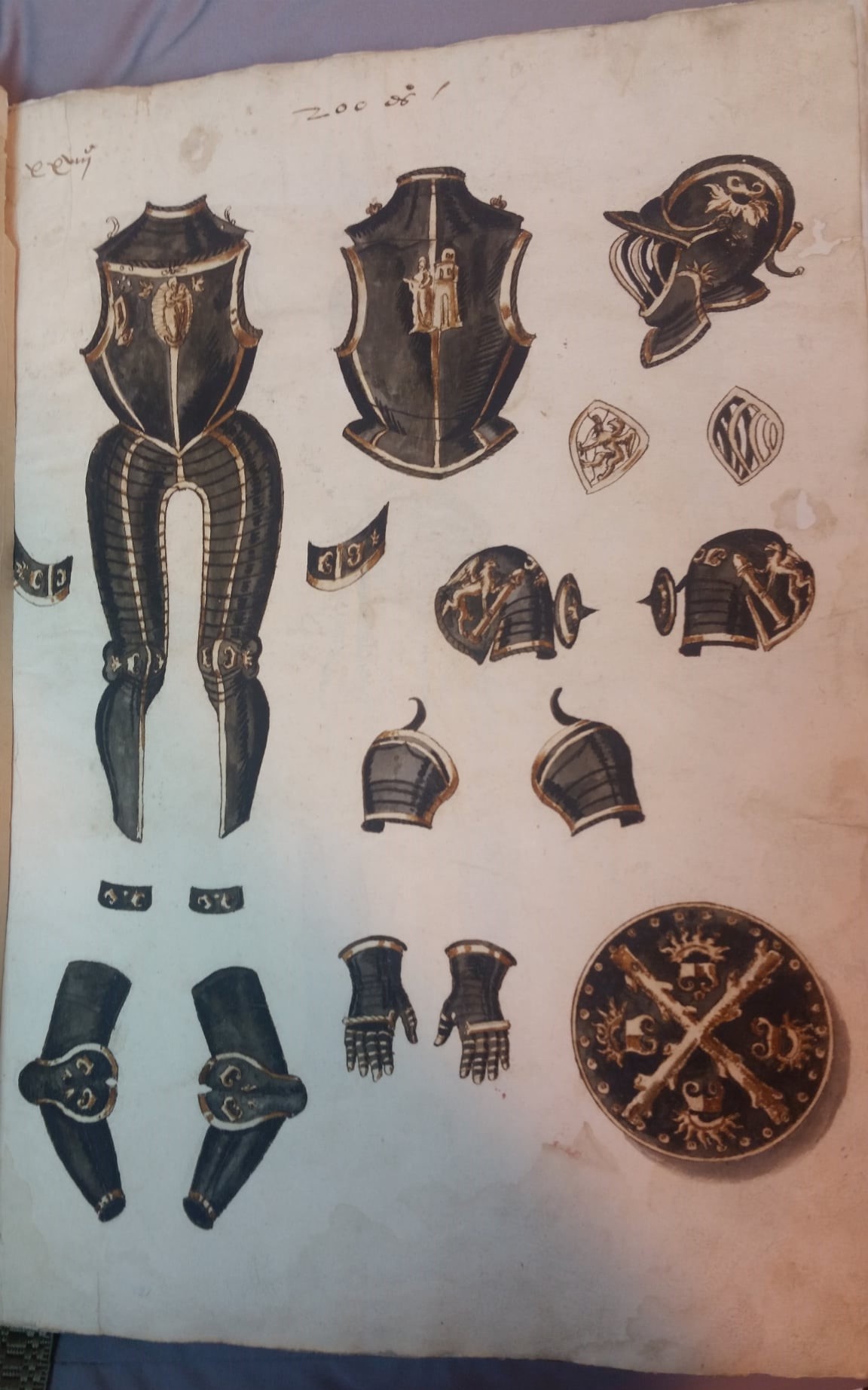
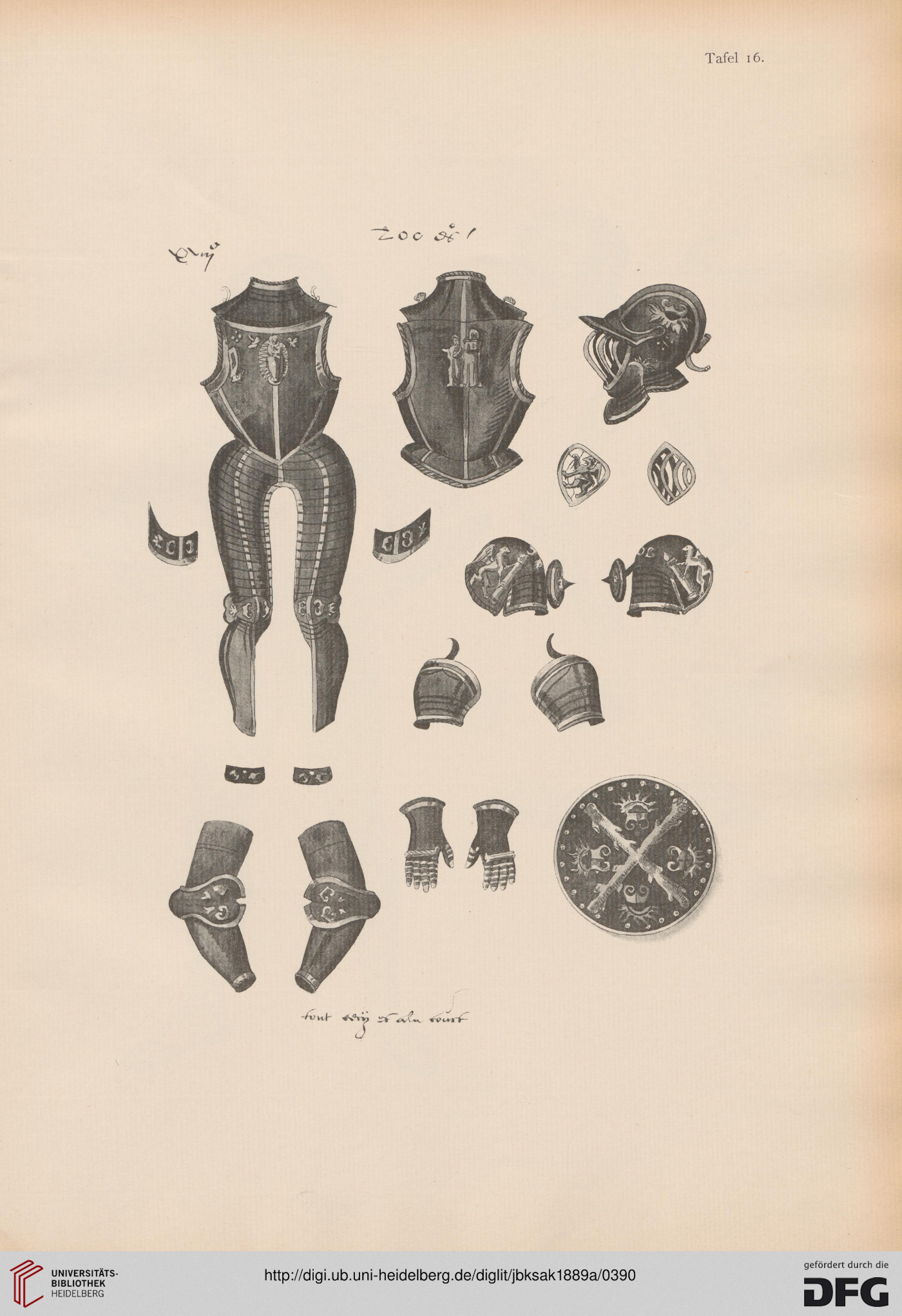
During a discussion of this piece with Chassica Kirchhoff (June 2025) she shared the interesting included image (C. Kirchhoff, 2017) from the Inventario Illuminado which illustrates an armor decorated with fire steels which also includes a pair of single plate tasset terminal plates as exchange pieces. She also said that in his KHM facisimile of the Inventario Illuminado, Valencia alluded to its identification as Real Armeria A108, described in the Relacion notarial de Valladolid as "Arnes negro, de Colman con estas piezas y dorado," and further described in Valencia's "Catalogo Historico-Descriptivo De La Real Armeria De Madrid" on p. 38-39. This was one of the armors that Kolman began in 1531, and that was delivered in 1532 (as Kolman died that year, this makes it one of his last armors for the emperor, perhaps based on measurements acquired during his trip to Toledo in 1529). A-108 is also described on pages 90-92 of Calvert's "Spanish Arms and Armour..." Calvert includes the information indicating the date, maker, etc. of A-108.
Exhibited: Feb. 10 2023-Feb. 29 2024 Orange County Historical Museum Hillsborough NC
If you have any questions, please send them to Wade Allen
This site last updated Wed Jul 09 21:38:05 EDT 2025